CGWA Replaces NAW Affidavit with non availability of Water Supply Certificate
Many projects were required to submit an affidavit on water non-availability to obtain a CGWA NOC under the CGWA Guidelines, 2020 (effective September 2020). This was used as a quicker alternative to avoid delays in getting certificates from local water authorities.
Earlier Practice
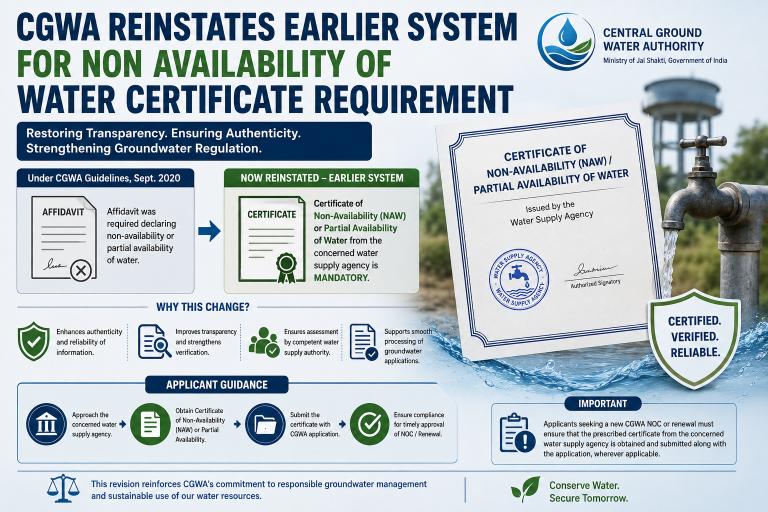
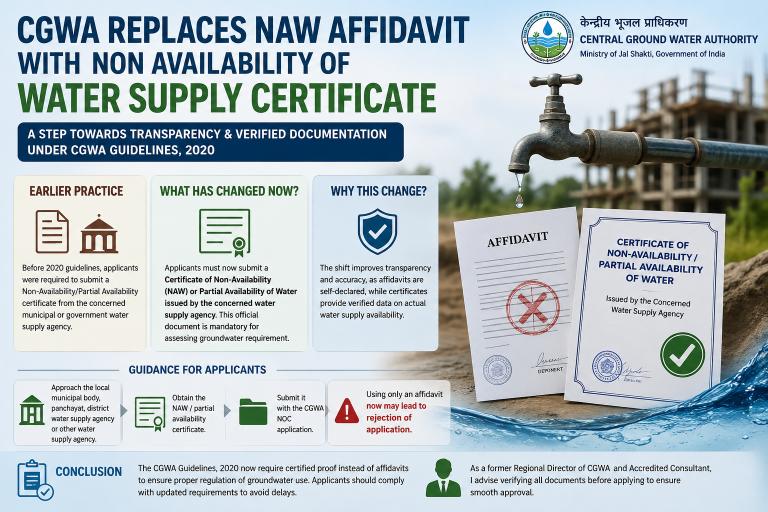
Before the 2020 guidelines, applicants were required to submit a Non-Availability/Partial Availability certificate from the concerned municipal or government water supply agency.
What Has Changed Now?
Applicants must now submit a Certificate of Non-Availability (NAW) or Partial Availability of Water issued by the concerned water supply agency. This official document is mandatory for assessing groundwater requirements.
Why This Change?
The shift improves transparency and accuracy, as affidavits are self-declared, while certificates provide verified data on actual water supply availability.
Guidance for Applicants
- Approach the local municipal body, panchayat, district water supply agency, or other water supply agency
- Obtain the NAW/partial availability certificate
- Submit it with the CGWA NOC application
Using only an affidavit now may lead to rejection of the application
Conclusion
The CGWA Guidelines, 2020 now require certified proof instead of affidavits to ensure proper regulation of groundwater use. Applicants should comply with updated requirements to avoid delays.
As a former Regional Director of CGWA and Accredited Consultant, I advise verifying all documents before applying to ensure smooth approval.